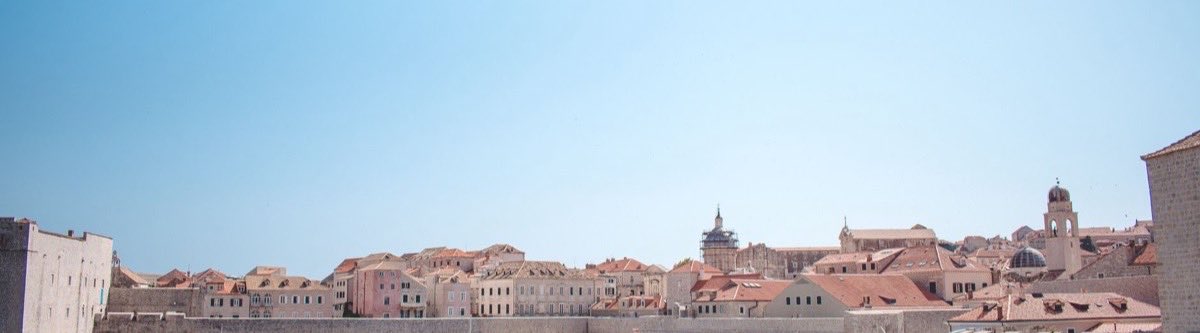
Getting online in Split — and on the ferries out of it
Split runs faster than Croatia's national average at around 50 Mbps on 4G. The connectivity question here is not the city, it is the channel crossings to Hvar and Brač.
Croatia eSIM plans compared
 Nomad50 GB · 30d$31$0.62/GB✓ checkedBest value10 plans
Data Days Price Per GB 1 GB 7 $4 $4 3 GB 30 $7 $2.33 5 GB 30 $9 $1.80 Unlimited 3 $11 — 10 GB 30 $15 $1.50 Unlimited 5 $18 — 20 GB 30 $21 $1.05 Unlimited 7 $25 — 50 GB 30 $31 $0.62 Unlimited 10 $33 —  Airalo50 GB · 30d$35$0.70/GB✓ checked18 plans
Data Days Price Per GB 1 GB 3 $4 $4 3 GB 3 $7 $2.33 3 GB 7 $7.50 $2.50 Unlimited 3 $9.50 — 5 GB 7 $9.50 $1.90 5 GB 15 $10 $2 5 GB 30 $10.50 $2.10 10 GB 7 $15.50 $1.55 10 GB 15 $16 $1.60 10 GB 30 $17 $1.70 Unlimited 5 $19 — 20 GB 15 $24.50 $1.23 Unlimited 7 $25 — 20 GB 30 $25.50 $1.27 Unlimited 10 $29.50 — 50 GB 30 $35 $0.70 Unlimited 15 $39 — Unlimited 30 $59 —  Saily20 GB · 30d$27.99$1.40/GB✓ checked5 plans
Data Days Price Per GB 1 GB 7 $3.99 $3.99 3 GB 30 $7.99 $2.66 5 GB 30 $10.99 $2.20 10 GB 30 $17.99 $1.80 20 GB 30 $27.99 $1.40  HolaflyUnlimited · 3d$11.90unlimited✓ checked6 plans
Data Days Price Per GB Unlimited 3 $11.90 — Unlimited 5 $20.50 — Unlimited 7 $27.50 — Unlimited 10 $36.50 — Unlimited 15 $50.50 — Unlimited 30 $73.90 —
Providers marked ✓ checked were read from their own site on ; those marked indicative come from our earlier research and are not yet verified. Providers change pricing without notice — check before buying. Host networks marked ? are taken from provider listings and have not been confirmed by us; where no network is shown, the provider does not publish one. How we check prices.
The city is not the problem
Split has excellent 4G and 5G. Average 4G speed in the city is about 50 Mbps, above the Croatian national average of 45 Mbps, and 5G reaches around 210 Mbps where it is available. The Riva waterfront and the streets around Diocletian's Palace are well served. HT or A1 are the networks to be on here, and every travel eSIM sold for Croatia runs on one or both.
So if you are staying in Split and taking day trips by road, stop reading and buy the cheapest plan that covers your data need. The rest of this page is about the things that actually catch people out.
Ferries are where it gets thin
Split is the hub for Dalmatian island hopping, and that changes what you need from a connection. Signal on the ferry routes is moderate rather than good: solid near the ports at either end, weaker mid-channel. On a crossing to Hvar, Brač or Vis you should expect a stretch in the middle where nothing loads.
The practical consequence is about timing, not coverage. The Jadrolinija app is the standard way to check schedules and book, and it is real data use — checking a return sailing while you are already mid-channel is exactly when the signal will not be there. Pull up schedules and download island maps before you board, not after.
On the islands themselves, coverage on the major ones is good. It is the water in between that is patchy.
Two places it drops out entirely
The underground of Diocletian's Palace. Deep inside the stone substructures there is no usable signal, which surprises people because the streets directly above are fine. It is a building, not a network failure, and no provider fixes it.
Smaller island approaches. Some of the less-served ferry landings drop out on approach. The major routes are fine.
Summer changes the maths
Two things load the network in Split between May and September.
Cruise ship season brings thousands of day visitors into a compact old town, all of them arriving at once and all of them using maps at the same time. And Ultra Europe in July brings 150,000-plus people to the Split area, which congests the network in a way you will notice at the venue and around it.
Congestion is not the same as no coverage — you will still have a connection, it will just be slower than the 50 Mbps figure suggests. If you are in town for Ultra specifically, plan for messaging to work and video to struggle.
What to buy
If you are coming from another EU or EEA country, buy nothing. Croatia is in the EU, your home SIM roams at domestic rates, and there is no reason to pay twice.
Everyone else has three routes.
| Option | Price | Notes |
|---|---|---|
| Saily 1GB / 7 days | $3.99 | Verified; cheapest small plan we hold |
| Airalo 3GB / 7 days | $7.50 | Verified 13 Aug 2026 |
| Nomad 10GB / 30 days | $15 | Verified 18 Aug 2026; $1.50 per GB |
| Airalo 20GB / 30 days | $25.50 | Verified; $1.28 per GB |
| Nomad 50GB / 30 days | $31 | Verified 18 Aug 2026; $0.62 per GB |
| Local SIM at SPU | about $11 | Passport required to register |
A week of island hopping with the Jadrolinija app, maps and messaging is a 3–5GB trip for most people. Photo uploads push it higher.
On buying at Split Airport: there is a SIM counter, but summer queues run up to 20 minutes. That is 20 minutes at the end of a flight, for something that costs about $11 when a comparable eSIM starts at $3.99 and installs before you leave home. We would not do it. If you want a local SIM, buy it in town from an A1 or Telemach shop instead — bring your passport, since registration requires ID either way.
Full plan pricing across every provider is on the Croatia hub. If you are not certain your handset takes an eSIM, check eSIM compatible phones before you buy one.
Common questions
Will my phone work on the ferry to Hvar?
Partly. Coverage is good near the ports at both ends and weaker mid-channel, so expect a dead stretch in the middle of the crossing. Download ferry schedules and island maps before you board.
Should I buy a SIM at Split Airport?
Probably not. There is a counter, but summer queues reach 20 minutes and the local SIM costs about $11 against $3.99 for the cheapest eSIM we hold for Croatia. Buy in town or install an eSIM before you fly.
Is the signal bad inside Diocletian's Palace?
Only underground. The streets and squares within the palace complex have excellent 4G and 5G. The deep stone rooms of the substructures have no usable signal on any network.