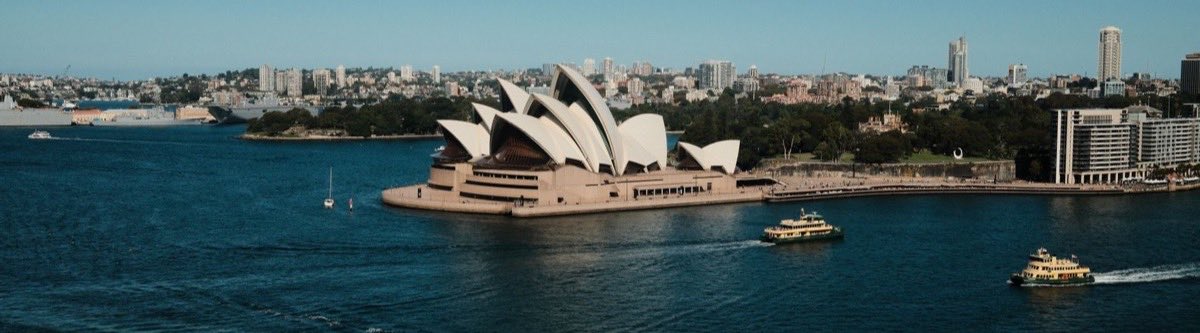
Data in Sydney: strong everywhere, except for a few hours a year
There are essentially no dead zones in the parts of Sydney visitors use, and average 4G runs around 60 Mbps. The city's real data dependency is administrative — almost everything worth doing is booked and ticketed through a phone.
Australia eSIM plans compared
 Nomad50 GB · 30d$32$0.64/GB✓ checkedBest value10 plans
Data Days Price Per GB 1 GB 7 $4 $4 3 GB 30 $7 $2.33 5 GB 30 $10 $2 Unlimited 3 $11 — 10 GB 30 $15 $1.50 Unlimited 5 $18 — 20 GB 30 $24 $1.20 Unlimited 7 $25 — Unlimited 10 $29 — 50 GB 30 $32 $0.64  Airalo50 GB · 30d$45$0.90/GB✓ checked18 plans
Data Days Price Per GB 1 GB 3 $4 $4 3 GB 3 $7.50 $2.50 3 GB 7 $8 $2.67 5 GB 7 $10 $2 5 GB 15 $10.50 $2.10 5 GB 30 $11 $2.20 Unlimited 3 $11.50 — 10 GB 7 $16.50 $1.65 10 GB 15 $17.50 $1.75 10 GB 30 $18 $1.80 Unlimited 5 $18.50 — Unlimited 7 $26.50 — 20 GB 15 $29 $1.45 20 GB 30 $30 $1.50 Unlimited 10 $32 — 50 GB 30 $45 $0.90 Unlimited 15 $45 — Unlimited 30 $66.50 —  Saily20 GB · 30d$29.99$1.50/GB✓ checked5 plans
Data Days Price Per GB 1 GB 7 $3.99 $3.99 3 GB 30 $7.99 $2.66 5 GB 30 $10.99 $2.20 10 GB 30 $17.99 $1.80 20 GB 30 $29.99 $1.50  eSIM Go10 GB · 30d$17$1.70/GBnot sold to travellers2 plans
Data Days Price Per GB 3 GB 30 $8.50 $2.83 10 GB 30 $17 $1.70 There is nowhere to send you. eSIM Go sells wholesale to resellers rather than to travellers: its site offers “Contact Sales” instead of a checkout, publishes no consumer price, and has no per-country pages — checked on 18 August 2026. The figures above have never been verified and cannot be, because the product is not on sale to the public.
Providers marked ✓ checked were read from their own site on ; those marked indicative come from our earlier research and are not yet verified. Rows marked not sold to travellers are for a wholesale platform that sells to resellers rather than to the public, so the prices shown cannot be bought at any checkout and are listed only to show what our older dataset contained. Providers change pricing without notice — check before buying. Host networks marked ? are taken from provider listings and have not been confirmed by us; where no network is shown, the provider does not publish one. How we check prices.
Coverage: there is no bad news here
Sydney is one of the easier cities in this guide to be a visitor in. 5G runs across the CBD, the Eastern Suburbs, the Inner West and the North Shore. The Opera House precinct, Bondi, Darling Harbour, the Harbour Bridge climb and the ferry routes are all covered. Average 4G speed sits around 60 Mbps, and 5G peaks above 400 Mbps on Telstra.
Dead zones in the areas tourists actually visit: essentially none.
That means the plan you buy makes very little difference to your experience, and you should buy on price rather than on any coverage claim. This is worth saying plainly because it is not true of Australia as a whole — outside the coastal cities the carrier choice is the entire question, which is covered on the Australia hub.
The city runs on digital tickets
What you actually need data for in Sydney is booking, not navigating.
The Opera House sells timed-entry tickets online. Vivid Sydney, the light festival in June, needs tickets bought in advance. Ferries and the Opal transit card work best through the app. Harbour cruises, Blue Mountains tours, guided coastal walks between Bondi and Coogee — all booked digitally.
A visitor without a connection here is not lost so much as locked out of the booking layer the city's experiences run through. The apps worth installing before you land are Opal Travel, which loads your transit card and shows real-time transport, Transport NSW for timetables, and a ride-hailing app for the trips the network does not reach.
New Year's Eve is the one real exception
Sydney's NYE fireworks pull over a million people around the harbour, and congestion between roughly 11pm and 1am is extreme. Messaging lags, maps crawl, and this is a capacity problem at the cell rather than a coverage problem — no provider, plan or unlimited allowance gets you around it.
Plan for it the way you would plan for a festival. Download the map area and your tickets before you leave the hotel, agree a meeting point and a fallback time with everyone you are with, and assume you will not be able to coordinate by phone once you are in the crowd.
Buying on arrival is genuinely easy here
Australia has one of the most relaxed prepaid regimes anywhere: no ID is required, so it is an instant purchase. If you have travelled in Europe or Asia and expect to hand over a passport at the counter, you do not need to here.
Sydney airport's international arrivals hall has Telstra, Optus and Vodafone counters, with queues of about 10 to 15 minutes. One detail worth knowing before a long-haul arrival: the Telstra desk closes around 8.30pm. Land later than that and you are choosing between the other counters and waiting until morning — so if you want Telstra specifically, and a late flight, sort it out in the city instead.
A typical Australian airport SIM runs about $18 in our data. Supermarket kits from Woolworths or Coles are cheaper, sold off the hook in the mobile phone aisle with no staff interaction, and are the option we would take for anything longer than a night. Full detail is on our where to buy a SIM in Australia page.
What eSIM plans cost
Airalo's rows were read from its own site on 13 August 2026 and Saily's from its own site on 16 August 2026. The others are indicative — earlier research rather than a live checkout.
| Plan | Price | Per GB | Basis |
|---|---|---|---|
| Saily 1 GB / 7 days | $3.99 | $3.99 | verified 16 Aug |
| Airalo 1 GB / 3 days | $4 | $4 | verified |
| Airalo 5 GB / 30 days | $11 | $2.20 | verified |
| Nomad 10 GB / 30 days | $15 | $1.50 | verified |
| Airalo 10 GB / 30 days | $18 | $1.80 | verified |
| Airalo 50 GB / 30 days | $45 | $0.90 | verified |
An eSIM Go row at $17 for 10 GB used to sit in that table. eSIM Go sells wholesale to resellers and publishes no consumer price — checked on esim-go.com on 18 August 2026, where there is no basket, no checkout and no per-country page — so its rows cannot be bought or ever verified. See our eSIM Go page.
A weekend of maps, tickets and messaging fits inside 1 GB. A week in the city is comfortable on 5 GB at $11, and 10 GB at $18 covers a fortnight or a trip that adds Melbourne. Fifty gigabytes at 90 cents a gigabyte is the only genuinely cheap data in the Australian set, and it exists for month-long stays rather than holidays.
One gap to state openly: none of the eSIM providers we track has a confirmed host network in Australia. Not Telstra, not Optus, not Vodafone — we hold nothing for any of them. In Sydney that does not matter, because all three networks are strong across the city. It matters a great deal if your trip continues inland, and the fix there is a local SIM bought deliberately rather than an eSIM bought on price.
Common questions
Do I need my passport to buy a SIM card in Sydney?
No. Australia requires no ID for a prepaid SIM — it is an instant purchase, at an airport counter, a carrier store or a supermarket. That is unusual, and it makes buying locally on arrival far less of a chore than in most of Europe.
Is there a SIM counter at Sydney airport for late arrivals?
The international arrivals hall has Telstra, Optus and Vodafone counters, but the Telstra desk closes around 8.30pm. For a late-night landing, either use one of the other counters or install an eSIM before you fly so you have data the moment you switch the phone on.
Will my phone work at the New Year's Eve fireworks?
Expect it not to, between about 11pm and 1am. Over a million people around the harbour congest the network regardless of which plan you bought. Download maps and tickets in advance and agree a physical meeting point before you head down.